

How do we connect renewables and new technologies to the grid?


With more than two decades in renewables and power systems, Joe brings a practical, systems-level view to one of the industry’s biggest challenges — helping utilities connect what’s next, without compromising what matters most.
Across North America, utilities are being tasked with expanding grid capacity to unprecedented levels and at unprecedented speed. This is on top of existing challenges such as aging infrastructure, resiliency and the ongoing energy transition. The legacy grid was not designed to handle much of what’s needed to support large variable load growth and accommodate renewable generation that are displacing conventional generation.
For Joe, conversations with clients are consistent. They’re being pushed to expand grid capacity quickly, while dealing with ongoing supply chain dynamics where getting critical transmission and distribution equipment fast enough is a challenge. At the same time, they’re working to integrate variable renewable generation and large loads such as data centers while maintaining the reliability and stability their systems depend on.
Those challenges are reshaping how the grid is planned and built.
“The old playbook largely doesn’t work anymore,” Joe explains. “Utilities are having to rethink everything — from how they plan to how they design the grid and procure infrastructure equipment.”
Long equipment lead times mean planning cycles are compressed and less predictable. As a result, utilities are shifting toward standardized, modular designs, allowing them to order equipment earlier and build faster. Instead of designing everything uniquely, they’re designing around what can be delivered at scale.
But the technical challenge is growing.
Renewable resources like wind and solar are inherently variable and don’t generally provide the same stabilizing characteristics as traditional generation. As thermal plants are retired, maintaining system stability requires new ways of thinking — from energy storage and synchronous condensers to advanced grid technologies like Flexible Alternating Current Transmission (FACTS) devices.
For Joe, this is where engineering insight matters most.
“The priority and goal has always been maintaining grid stability and reliability while keeping things affordable. From a technical standpoint, we focus on those aspects while finding smart ways to move faster.”
That balance between speed and stability is now central to every major transmission decision.
And the pressure is only increasing.
The rapid growth of data centers, electrification and new industries is fundamentally changing demand. In many cases, utilities are being asked to double or even triple grid capacity in timelines the industry has never seen before.
To respond, transmission strategy is evolving. Utilities are combining traditional expansion with new solutions — higher voltage systems, HVDC, dynamic line rating solutions and real-time monitoring — to get more out of existing infrastructure while building what’s needed for the future.
Throughout it all, planning and system studies remain the foundation.
-
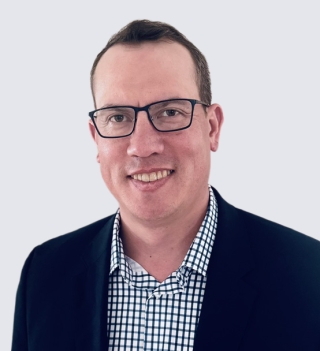
Senior Director, Transmission and Distribution – North America
Joe Fox supports utilities in connecting renewables and emerging technologies to the grid, balancing speed, reliability and system stability as electrification and data center demand reshape transmission and energy infrastructure planning.
