

How do we build more resilient power systems?


One of the biggest shifts I've seen during my career managing and leading complex power system projects is how we think about resilience. From my time as a professor of electrical power systems and distribution networks to the years I've spent studying power system economics, I’ve seen firsthand how the industry’s understanding of resiliency has changed.
Historically, resilience was largely viewed as an operational challenge. Infrastructure was designed first, and resilience was addressed later through operational procedures, maintenance strategies or emergency response plans. That approach worked well when power systems were built around predictable generation, and relatively simple operating conditions.
Today's grid is fundamentally different.
Power systems are more interconnected while becoming increasingly digital and significantly more dependent on renewable energy. They rely on communication networks, advanced control systems, distributed energy resources and cloud-based technologies in ways that would have been difficult to imagine a decade ago. At the same time, utilities are facing growing pressure to deliver infrastructure faster while responding to new demand from AI data centers, electrification and industrial decarbonization.
In this environment, resilience can no longer be treated as something that happens after infrastructure is built.
Instead, resilience must become a planning objective.
That means designing networks capable of anticipating, withstanding, adapting to and recovering from a wide range of disruptions, not only equipment failures and extreme weather, but also cyber incidents, communication failures, renewable variability and operational uncertainty.
The biggest challenge isn't a single threat. It's the interaction between multiple risks.
As digital and physical infrastructures become increasingly interconnected, disruptions that begin in one part of the system can quickly affect another. At the same time, renewable generation changes traditional operating characteristics, reducing system inertia and creating new planning considerations.
At Jacobs, we're helping clients move resilience upstream by embedding it into planning, investment and system design. By integrating engineering experience, power system studies, digital technologies and operational insight, we help utilities build networks that remain reliable while adapting to a rapidly changing energy landscape.
The future grid won't be defined by its ability to avoid disruption, rather by its ability to continue delivering critical services despite disruption.
Resilience begins during planning – not operations
One of the most important changes happening across the industry is recognizing that resilience is significantly less expensive to build into infrastructure than it is to retrofit later.
Historically, planning focused primarily on cost and efficiency. Those objectives remain important, but future power systems must also account for uncertainty. Embedding resilience into planning allows utilities to avoid costly redesigns later while ensuring new infrastructure remains adaptable as technologies and operating conditions evolve.
Simply put, resilience should become another design criterion, not another project.
Digitalization creates both opportunity and responsibility
Advanced sensing, artificial intelligence, digital twins and real-time analytics are transforming how utilities monitor and operate their networks.
These technologies provide unprecedented visibility and automation to improve asset management and supporting better decision-making while enabling more adaptive network operations.
However, every additional digital connection also creates another potential point of vulnerability.
Future success depends on balancing digital innovation with cyber awareness. Rather than planning for individual threats, utilities should design systems that remain secure and operational even when digital conditions become uncertain.
The most resilient power systems of the future will combine physical robustness, operational flexibility and cybersecurity within one integrated planning framework.
-
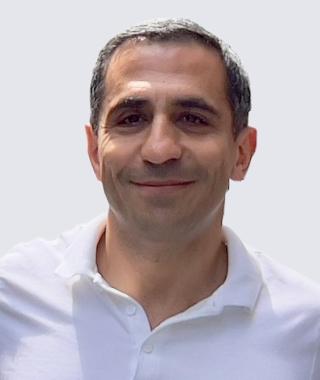
Senior Associate Director, Power Systems Studies Team Lead, United Kingdom
Geev Mokryani helps utilities, developers and major infrastructure clients plan resilient, future-ready power systems. He combines deep experience across industry and academia to solve complex grid connection and network planning challenges.
