

Navigating risk, cost and complexity in coastal resilience


Coastal resilience is no longer just an engineering challenge; it’s a complex balancing act shaped by climate risk, funding realities and long-term uncertainty.
Around the world, coastal protection programs are evolving from standalone defenses into integrated solutions that support communities, economies and the environment. Jacobs’ coastal and flood resilience specialists bring experience from some of the world’s most complex programs, combining technical depth with practical insight into what it takes to deliver.
In this Q&A, our global principal for flood infrastructure engineering, Charles Schelpe, shares his perspective on the decisions, trade-offs and innovations shaping the future of coastal protection.
You’ve worked across different geographies with different coastal contexts. What’s one moment or project that changed or captured how you think about coastal resilience?
One project that really shaped how I think about coastal resilience was the TEAM2100 program to manage and improve tidal flood defenses along 205 miles (330 kilometers) of the River Thames.
It was a 10-year program to maintain and upgrade London’s tidal flood risk management assets in line with the Thames Estuary 2100 strategy and in response to their condition and risk of failure, predicted sea-level rise and increasingly frequent storm surges. These assets vary from active assets such as the iconic Thames Barrier and the associated barriers and floodgates, to fixed assets such as floodwalls, levees, erosion protection and intertidal habitat. Many of these assets were originally constructed in the 1980s with a design life of around 50 years.
What stood out to me was the realization that even the most robust engineering solutions are built systems that have a defined lifespan. Although in some cases an asset’s lifespan can be extended beyond its design life through proactive maintenance and repair, climate change is accelerating how quickly those assets need to adapt, be upgraded or be replaced.
That experience shifted my thinking from focusing on delivering individual assets to creating systems that can evolve over time — because resilience is about how we plan for what comes next.
People often describe coastal protection as an engineering problem. In today's context, where do you think that perspective falls short?
Coastal resilience has become as much a strategic and societal challenge as it is a technical one. Framing it purely as an engineering problem overlooks the broader factors that ultimately determine whether projects move forward.
Today, one of the biggest constraints is funding. To secure investment, projects must deliver broader value —enhancing the natural environment, supporting communities and contributing to placemaking.
Successful schemes are no longer just about steel and concrete. They integrate ecological improvements, public benefits and alignment with policy priorities. In many cases, they also require coordination across multiple agencies, with strong alignment needed to meet different stakeholder interests and objectives.
Ultimately, engineering is only one part of the equation — outcomes are shaped just as much by the benefits a project delivers across multiple needs and policy objectives.
Beyond technical challenges, what are the toughest decisions facing the industry today?
The toughest decisions are rarely technical — they’re about prioritization and trade-offs as well as long-term commitment. At the core is funding: where and when to invest, and how much is enough.
This applies to the ongoing operation and maintenance of existing assets as well as new infrastructure. It can be especially difficult to justify investment in areas that haven’t experienced recent flooding, even when the risk is clear. There are also difficult decisions around affordability and protection levels. In some cases, it’s simply not viable to protect every community, leading to decisions such as relocation that carry significant social and economic consequences.
At the same time, clients must weigh up environmental trade-offs and determine how to deliver protection while minimizing impacts on natural systems. The real challenge is balancing economic, social and environmental priorities while making decisions with incomplete information and growing climate uncertainty.
Looking ahead, what will define a successful coastal protection program, beyond just delivering the project?
It goes beyond infrastructure — it’s about enhancing the environment and integrating seamlessly into its surroundings, contributing to both ecological value and the urban landscape.
A good example is the East Side Coastal Resiliency Project in New York. In addition to delivering a coastal defense system, the project improves community access to waterfront parks and enhances park amenities, environmental habitats and public spaces.
It also needs to be adaptable. Solutions must evolve as conditions change, whether through raising defenses or integrating with future development. Ultimately, success means creating resilient systems that not only protect communities but also support sustainable growth and long-term livability.
Singapore’s vision for the Long Island development is a strong example of this approach. It brings together coastal protection, land reclamation and urban development to create new space that supports both flood resilience and future growth. By integrating water management, infrastructure and public spaces from the outset, it demonstrates how protection can be designed as part of a broader, long-term vision rather than a standalone intervention.
I am hopeful that we will continue to see more projects adopt this kind of integrated, forward-thinking approach — where resilience is part of a broader vision for how people live, work and interact with the coast and tidal estuaries. The opportunity now is to develop solutions that reduce risk today while remaining effective and adaptable for decades to come.
In complex coastal projects, where do you see the biggest gaps between technical analysis and what gets decided or implemented?
The biggest gap is in how technical analysis translates into real-world implementation.
Decisions are often shaped by constraints that the analysis alone doesn’t capture. For example, space is often limited, particularly in dense or operational environments, where defenses can’t disrupt day-to-day activities. Existing infrastructure and future development plans as well as land availability all play a role in what is feasible. Cost and multi-stakeholder priorities further shape outcomes. What may be optimal from an engineering standpoint is often scaled back or adapted to align with funding, planning requirements and broader objectives.
As a result, implementation is about finding a solution that works within real-world constraints and can be delivered over time, rather than the “best” solution. That’s why we’re seeing more integrated and incremental approaches, where flood protection is embedded into wider urban development.
Closing the gap is about designing with delivery in mind from the outset.
How do you approach project situations where there isn’t a clear correct answer, only trade-offs that need to be made?
It comes down to making informed trade-offs across three key factors: cost, environmental impact and the level of protection.
For example, higher levels of protection often require larger, more complex structures. That can increase costs and result in more visible landscape and environmental impacts. At the same time, there are competing priorities between protecting infrastructure and preserving natural ecosystems. Solutions that are effective from a risk perspective may also introduce challenges for coastal habitats.
In complex environments such as ports, additional constraints come into play. These include navigation, operational requirements and the need to maintain commercial activity.
Uncertainty adds another layer. Climate change and sea-level rise mean decisions made today must remain effective over decades, even as conditions evolve.
The approach is to bring stakeholders together early, define what matters most and make transparent decisions around those trade-offs. It’s about agreeing on a balanced solution that meets both immediate needs and long-term objectives.
Where has your global experience enabled you to make better decisions in local project settings? And when does it not translate as well?
As a storm surge barrier and coastal infrastructure specialist, my global experience gives me a robust understanding of what works and what to look out for. Working across regions, from rural coastlines to dense urban environments, exposes me to different challenges, priorities and proven approaches so I can anticipate practical needs early, such as space for future upgrades, operational constraints and long-term operations and maintenance. It also builds confidence in applying solutions that have been tested elsewhere.
At the same time, every location has its own regulations, cultural norms, constraints and expectations. What works in one place may not be feasible in another. That’s why local context matters. The most effective solutions combine global experience with local insight, adapting what works to fit the realities on the ground.
-
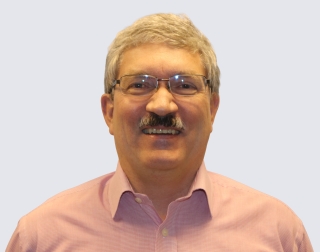
Global Principal, Flood Infrastructure Engineering
Charles has 40 years of global experience of flood risk management, river, water, public health and infrastructure projects. His experience spans the planning, design and delivery of major fluvial, tidal and coastal flood infrastructure. Throughout his career, he has worked...
