

How public and private partnerships deliver real value for clients and communities


By Jacobs’ Director of Commercial Funding and Finance Adam Price
In the Red River Valley in central North America, flood risk isn’t an abstract climate statistic — it’s a shared memory and a part of life. When spring snowmelt and heavy rain arrive together, communities worry if emergency calls can be answered, whether hospitals stay accessible and when businesses can reopen. The Fargo-Moorhead Flood Diversion Project exists to answer these questions. It’s a generational investment in protection for a region of roughly 235,000 people, delivered with Jacobs as program manager and public-private partnership (P3) advisor, helping translate public need into a long-term delivery and governance reality.
That’s what the best P3s (also known as PPPs or PFI — Private Finance Initiatives — in the U.K.) are really for. Not alternative financing, but certainty, reliability and the right application of experience and talent. A P3 brings private sector expertise and private finance together to deliver public infrastructure, then operates and maintains it to a pre-agreed contractual standard over a long concession, often 25 to 30 years.
It’s like a mortgage that includes the upkeep: You don’t pay the full cost upfront, and the monthly payment includes maintaining the asset through its life cycle. The key here is smarter asset management and efficient operations — that's where the greatest value is earned.
Across stakeholder roundtables and industry events, the mood is clear: Governments, funders and contractors see P3s as a key tool in stimulating infrastructure delivery globally.
Here are five insights I've learned from our most successful P3 programs.
1. P3 is not the answer for all infrastructure challenges
The P3 model isn’t a one-size-fits-all solution. In the U.K. in the early 2000s, it became the default answer for almost every type of project (hospitals, schools, fire stations), including schemes that were too small or too simple to justify the transaction costs. When some of these projects later struggled, it wasn’t because the P3 model was flawed; it was because it had been applied where it couldn’t deliver its full value.
P3s work best when used deliberately and at the right scale, starting with “no-regrets assets” — infrastructure that will unquestionably be needed and used over its full economic life and beyond, such as transport corridors, flood protection and core water and wastewater systems.
The next step is being strict about the minimum investment needed. As a general rule, you'll struggle to drive value for money once you dip below roughly $250 million in capital costs; the fees and procurement effort can swallow up most of the benefits.
A good example that ticks all right boxes in our portfolio is the Port of Miami Tunnel — the first transportation P3 in Florida and a challenge of the right scale with no-regrets assets. This award-winning program became a pioneering model for infrastructure financing and delivery, diverting an estimated 16,000 vehicles a day from downtown Miami through a new tunnel to ease gridlock.
2. Think beyond cash flow and capital relief: the real P3 rewards are in logistics, affordability discipline and data-driven maintenance
Yes, P3s can convert capital spikes into long-term, forecastable payments which helps affordability and budgeting, but the operational advantage is often much greater. By creating one end-to-end delivery package, you can avoid fragmented contracts and stretched inhouse capability. It pairs the right people with the right challenges.
The industry has also changed since the early 2000s. Today’s P3s must adopt and embed the latest technology, such as more detailed round-the-clock condition surveys and inspections, digital asset management and artificial intelligence-enabled insights to help improve asset management and lifecycle spending.
Case in point: In Wilmington, Delaware, Jacobs operates and manages the city’s wastewater assets under a long-term partnership, combining Operations & Maintenance with technology and biosolids upgrades, including monitoring that helps prevent overflows and processes that reduce hauling and emissions. Fixing the small things early is a contractual discipline, and it pays off in lower long-term costs and more efficient operations.
3. Active contract management is where value for money is won or lost
A P3 doesn’t end at financial close. For public authorities, the real work begins on day one of operations: understanding the contract, enforcing deductions when standards slip, managing variations and preserving project knowledge and relationships through staff turnover. At Jacobs, we also serve as lenders’ technical adviser across concessions, providing assurance to funders that the asset is being maintained appropriately and that money is spent where it should be.
In my experience, projects are generally designed, procured and delivered well. The cracks appear in operations when contract management weakens and the asset gets “sweated” — where the asset is overused to extract maximum value while spending as little as possible on upkeep. Instead of focusing on pre-emptive maintenance, it ruins asset durability and long-term results.
Traditional program delivery can reward the lowest first cost and leave future operators with the bill. A P3 can flip the incentive — If operations and maintenance and handback quality are part of the deal, durability suddenly matters. The Port of Miami Tunnel’s P3 structure included decades of operations and maintenance, focusing on decisions that protect whole life value, not opening day optics.
4. We don't need shiny new P3 models; success relies on better application
Occasionally, there’s market buzz about the next P3 financial model. My take: Our market doesn’t need reinvention, but we can earn better long-term rewards through incremental evolution and a focus on operations. Long-term investors, often pension-backed funds, value price stability and certainty, not novelty.
What’s needed is refinement: building on what works, embedding lessons learned (and building a learning organization), and updating requirements to reflect modern asset management, digital assurance and robust handback planning.
It also needs to be paired with pipeline certainty and a commitment from governments and public-sector bodies to build confidence in the market. Sweden has made a sensible move in this arena by publishing a list of target P3 projects, providing the market with what it values most: clarity on scale, timelines and long-term commitment.
And while we don’t need new P3 models, we’re seeing the benefit of new technology, especially artificial intelligence in asset management, condition surveys, inspections and bid evaluation.
This kind of tech-driven innovation offers benefits for all sectors, including water. In Arizona’s Sonoran Desert, Pima County needed better effluent quality to protect a river system, and traditional delivery couldn’t hit the regulatory timetable. A design build operate partnership at Agua Nueva delivered early, reduced costs and operating expenses and introduced an industry-first wastewater treatment process. When schedule, performance and operations are aligned, the community gets more than compliance. It gets water security.
5. Risk allocation: stick with the track record
The principle is simple: Risk should sit with the party best placed to manage it.
But the practice must be disciplined. There is a broadly accepted baseline of risk allocation by sector. Don’t stray too far without a clear, project-specific reason. The private sector will take whatever is handed over, but clients will pay more for it.
By focusing on these five insights, P3s stop being a debate about funding structures. They become what P3 projects represent at their best: public infrastructure designed, financed, operated and maintained to safeguard communities, improve quality of life and offer real, long-term value.
-
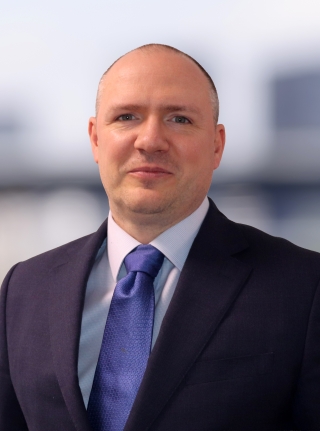
Director of Commercial Funding and Finance
Adam Price is Director of Commercial Funding and Finance at Jacobs, specializing in infrastructure investment, public-private delivery agreements and innovative funding models. With more than two decades of experience leading major capital programs worldwide, Adam guides clients through complex financial...
