

Program pioneers | What does it take to lead the world’s most complex programs?


“Delivering complex programs is the greatest team sport on earth,” says Jacobs Senior Vice President of Global Program Management Keoki Sears. “Programs require hundreds of people across the globe to work together to achieve a goal that at the time can only be described, on a pitch that is ever-changing, with a team that may not typically practice together, in a match that will only ever be played once.”
This perspective shapes how Keoki leads. Keoki identifies what matters most and then builds the conditions for the program to succeed.
For Keoki, leading program management is about creating and holding the line of sight to the program vision and minimizing the cost of complexity while creating the conditions for others to do their best work.
Building comes naturally to Keoki, starting with his Fischertechnik construction-toy days. His fascination and curiosity came from how the pieces fit together. This same approach shapes him today as he leads Jacobs’ program management practice around the world – often being brought in to consult and advise on how complex systems come together.

Keoki calls himself a people-and-profits engineer because the toughest challenges often sit at the intersection of people, process and business viability. In his experience, organizational and human complexities often matter as much as technical expertise.
A defining career moment came when selecting where to invest his time, landing on a program to deliver the infrastructure for a major global sporting event, not because it had the strongest legacy ambition, but because it could. The program offered the chance to build precincts with lasting post-event purpose and help an ambitious nation build long-term capability. That decision reinforced a lesson that continues to guide him today: the most meaningful opportunities are not always the most obvious ones.
After more than 30 years delivering complex programs across the globe, Keoki is leading the program management team with a continued focus on knowledge sharing and digital capabilities as well as strengthening frameworks that are applied consistently across programs. His focus is on helping program leaders draw on lessons learned across programs and industries, turning experience into program management best practices that can be applied with consistency and clarity.
While every program creates its own delivery environment, the challenges are often similar: bringing people together, driving decisions, maintaining stakeholder alignment and achieving outcomes. We asked Keoki to share some of the lessons he's learned leading major programs around the world.
Ask Keoki
What stakeholder and governance challenges do programs create?
Programs operate within complex stakeholder networks, where authority and influence don’t always align. Navigating that space is one of the core challenges for any program manager.
Many clients are experts in operating their assets, however co‑development and co‑delivery bring new ways of working. Effective collaboration requires new behaviors and skills that aren’t intuitive early on.
And because programs represent significant investment, political timelines rarely align with program schedules. Learning to work with – rather than against – electoral cycles, funding windows and public commitments is often essential to delivering successfully.
Across your career, what types of program environments create the most unique delivery challenges?
Throughout my career delivering programs across the United States, Europe, Asia and the Middle East, I have encountered several distinct delivery environments, each with its own challenges.
Some programs exist to solve challenges that are only achievable at scale, like the London Olympics, for example. In these environments, using the power of a program to create an enduring legacy becomes a critical outcome. Maintaining that broader perspective while addressing daily delivery complexity is often the greatest challenge.
Some programs involve complexity and scale that significantly outpace existing capability. This frequently happens in rapid growth areas. These environments require a step change in how organizations operate. Success depends as much on changing people dynamics and ways of working as it does on technical improvement.
Some programs require the client's own organization to evolve alongside delivery. In these environments, the role becomes one of coaching and capability building.
Then there are first-of-a-kind programs. Whether it is developing a new city from the ground up or delivering sustainable data centers, success depends on rigorous planning, digital enablement and the ability to apply lessons from one challenge to another.
-
The varied environments I’ve worked in have been deeply demanding in ways that are not always visible from the outside. They are high-stress, unforgiving, competitive and ever-changing environments. That's both the draw and the reality.
![Keoki Sears]() Senior Vice President, Global Program Management
Senior Vice President, Global Program Management
Which risks show up most often, and how do you anticipate/ manage them?
The toughest risks are often organizational rather than technical – issues like unclear delegations of authority, leadership transitions, organizational transformation and capability gaps that only surface under pressure. These risks are hard to spot early and even harder to mitigate effectively. As a result, they demand proactive, experienced planning and early program structuring.
Another common challenge arises when teams become too internally focused. Energy shifts toward internal outputs instead of shared program outcomes, weakening alignment with program and client goals. These risks can pull teams apart and fragment the program vision. The most effective response is a program-wide performance management framework that redirects energy toward shared outcomes and away from the internal dynamics that cause misalignment.
How have earlier programs shaped how you approached later ones?
They say “good judgment comes from experience, but experience comes from bad judgment.”
I have managed to avoid making the same mistakes more than once by ensuring that each program stands on the shoulders of the last.
A clear example is a program delivering the infrastructure for a major global sporting event. Early engagement revealed there was still an opportunity to align on the tournament's overall vision – something I recognized from an earlier program. We quickly developed a unified program‑wide master plan that showed stakeholders what was possible, anchoring the plan around the visitor experience, mobility, precincts and identity. It ultimately became the program’s legacy.
What advice would you pass on to the next generation of program pioneers?
The programs that need us most are rarely the ones running smoothly. We are most valuable when a client could not have taken on the scale or complexity alone, when stakeholders struggle to reach decisions and when articulating and agreeing on what is needed and how to get there remains just out of reach. That's where we belong.
Learn to be energized by complexity. When you see challenges, embrace them as opportunities. Because we do our best work when it is hardest to do and when it is needed most.
-
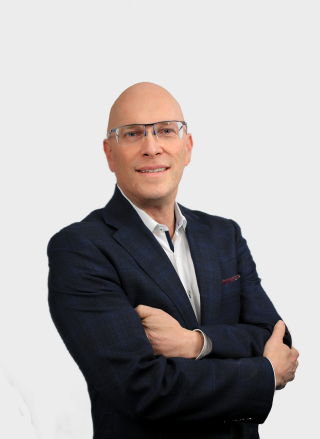
Senior Vice President, Global Program Management
Keoki Sears has more than 30 years’ experience managing the delivery of high-profile, multi-billion-dollar programs in the United States, Europe, Asia and the Middle East including the London 2012 and Rio 2016 Olympics and the 2022 FIFA World Cup Qatar...
