

Program pioneers | What do the most impactful programs leave behind?

Rick Robertson, vice-president, global program management, has spent nearly 40 years proving that the value of infrastructure lies in improving people’s lives, whether it’s about a family that finally has clean water running from a tap or a town that sleeps a little easier because a gate now holds back storm surges.
Behind those outcomes are programs that changed daily life in tangible ways, from bringing first-time access to clean, potable water in eastern Sri Lanka to delivering infrastructure improvements in Central America that continue to strengthen the country's economy, supporting jobs, public services and opportunities for future generations.
Rick has spent twenty-seven years of his career abroad, moving his family to wherever he could make the greatest difference through infrastructure. He’s been the person behind the drill rig and the person running the entire program. Both roles taught him the same thing and reinforced his leadership philosophy: build for the people who will be using it long after everyone else has moved on to the next job.
SIGNATURE PROGRAMS
- Sri Lanka Tsunami Reconstruction Program (Asia)
- Canal Expansion Program (Central America)
- Bolivar Roads Gate System, Texas (North America)
- Port Arthur Refinery Remediation, Texas (North America)
-
Good dashboards enable you to understand the program. Good people enable you to change its trajectory.
![Rick Robertson]() Vice President, Global Program Management
As a program pioneer, what sets Rick apart is where he places his attention. While he embraces processes and tools, he’s clear that investing in people matters most. A program can have every dashboard in the world and still fail if the right people aren’t in the room. One of his core leadership values is keeping everyone moving in the same direction, focused on the outcome the program was set up to deliver.
On one of the programs in Central America, Rick regularly engaged field teams in discussions about their top risks, recognizing that effective risk management requires both data and human insight. He combines engineering discipline with a thoughtful, people-centered approach to problem-solving.
ASK RICK

You spent nearly three decades moving between countries and cultures. How did you make that work?
My wife Renée was willing to move wherever the work took us, and I couldn’t have done any of this without her.
Our daughters were four-and-a-half and six when we first left Oregon, U.S. — while they benefited from an international education and experiencing different cultures it was also important to us that they had opportunities to develop close relationships with family. We traveled home at least once, often twice, every year, especially around the holidays and summer break, so they could stay connected to their grandparents and extended family back in the Pacific Northwest.
Looking back, what do you appreciate most about the global experience?
We made a point of seeing more of the world together. Every spring we traveled somewhere new from wherever we were based — my youngest has celebrated birthdays in places as far apart as Kenya and Kathmandu. One of my favorite memories is trekking the Inca Trail to Machu Picchu as a family.
The girls grew up in schools with classmates from dozens of countries, and I think that shaped who they are today. They’re now in their mid-twenties and carry a global perspective that comes from living alongside people from different cultures and backgrounds. I think it enabled them to develop a genuine appreciation for different viewpoints and the ability to find common ground with people from all walks of life.
You've reached a point in your career where many people would slow down. What keeps you motivated?
I’m passionate about serving people, and I look for programs where I think I can make a real difference.
A ports and maritime program I worked on in Central America helped triple the profitability of transit operations, and that money goes straight back to the country’s National Treasury. Right now, I’m working on a gate system in Texas that will be the largest flood and hurricane barrier of its kind in the world, protecting thousands of people around Galveston Bay from storm surge.
Nobody outside the industry will ever know my name for it, and that’s fine with me. I know it and the client knows it, and that’s enough.
Your leadership philosophy puts people first. What stays with you after a program ends?
It’s always the people. The relationships. The connection. Not just with our team, but also the communities we build for. And it means a lot to me.
I still have a group chat with the team from Sri Lanka, including the program director who first hired me there. Someone recently shared photos of the bridges we built after the tsunami and updates on a few of the schools and water systems. Moments like these remind me that the impact of a program is often just beginning when the work ends.
The same is true for other programs around the world. I'm still in touch with friends and former colleagues. Some of those relationships go back years, but the connection is still there.
If people remember one thing about how you lead, what would you want it to be?
I try to keep my ego in check. I like being a leader, but I don’t need to be the one on the front page. I want to be the kind of leader who creates front page headlines for the people around me, for the client and for the community we’re building for.
-
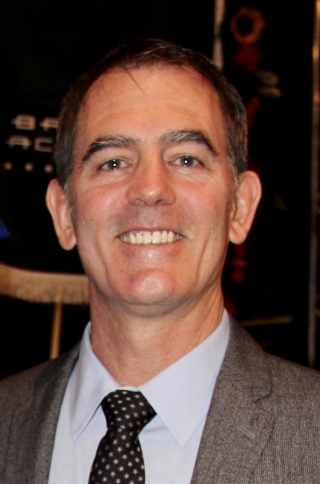
Vice President, Global Program Management
Rick Robertson is an accomplished leader, problem-solver and innovator with over 36 years of experience in pivotal, award-winning programs. He has lived and worked in several countries, including Egypt, Sri Lanka, Panama, Israel and Greece. Rick started his career as...
