



















Q&A
Mar 20, 2026


-
Save to favoritesShare with your friends
-
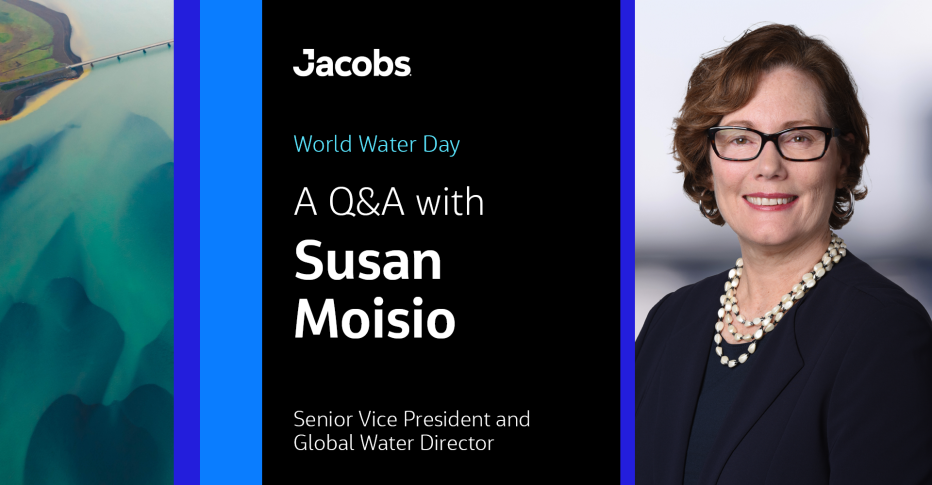
World Water Day is a moment to consider water’s importance to life, the environment and thriving communities. It’s also a call to action. As climate impacts intensify and water challenges grow more complex, the need for integrated, forward-looking solutions has never been greater. At Jacobs, that responsibility sits at the heart of our global water team.
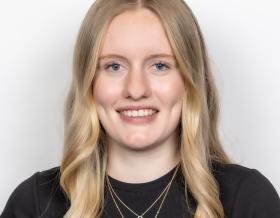
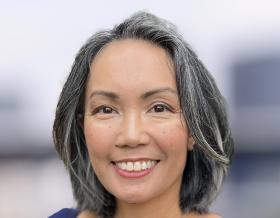
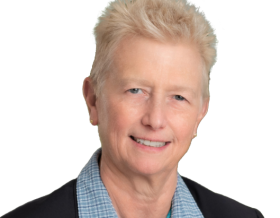
Leading our team of 9,000 water professionals is Senior Vice President Susan Moisio. From advancing watershed-scale strategies to championing digital innovation and mentoring the next generation of leaders, Susan understands that water connects everything — from energy and food systems to equity and economic resilience. In this World Water Day Q&A, she explains how the industry is evolving, her role championing women leaders and what it means to know water.
World Water Day is an opportunity to reflect. You’ve been leading our water team for five years — how has the industry changed in that time?
The pace of change has accelerated dramatically. Climate impacts are more visible and more urgent. Extreme events — whether flooding, drought or water quality crises — are happening more frequently. Each one reinforces the need to look at systems holistically.
We often say water challenges fall into three categories: too much water, too little water or poor water quality. But the real shift has been in how we address them. We’re thinking regionally and adaptively. Instead of solving a single asset issue, we’re asking: how does this fit within the broader water system? What does this mean over a 20-year program? We’ve moved beyond solving isolated challenges to embracing integrated approaches that tackle issues like climate resilience and equity together.
Water reuse has accelerated as well. Communities no longer view wastewater as waste, but as a valuable resource that supports resilience, renewable energy and broader sustainability goals. Water touches everything: energy, food, economic stability and even national security. World Water Day reminds us that our work matters at every scale.
Digital adoption has accelerated in recent years. How’s that reshaping the way we solve water challenges?
When I started in this industry, our flow monitors were chart recorders, we didn’t have radar rainfall and we relied on printed maps rolled out across a table. We understood systems — but we couldn’t see them the way we can today. Digital tools — Geographic Information Systems (GIS), hydraulic modeling, digital twins, system optimization — haven’t changed what we know about water. They’ve validated it and accelerated it. They allow us to see interconnected systems.
Take Wilmington, Delaware as an example. By integrating stormwater, wastewater, treatment plant operations and river interactions, we were able to view the system holistically. Some insights are straightforward, such as identifying a blockage. Others are more complex, like understanding how pump stations, collection systems and treatment processes interact under stress conditions.
Digital transformation is about more than a single platform or tool. It’s integrating data and expertise across the full asset lifecycle — planning, design, construction, operations and asset management — to make smarter, more resilient decisions.
This year’s World Water Day theme highlights water and gender. What does it mean to be a woman leader in water today?
It took me time to find my voice — and I think that’s something many women can relate to.
I’ve been fortunate at Jacobs to benefit from our Women’s Network and, early in my leadership journey, I formed a women’s group within our water conveyance and storage team. We later expanded to a global Women of Water network, providing a trusted space for mentorship and support. Externally, I’m also part of a ReSoLve cohort of women water leaders. That network has been incredibly powerful. Leadership can be demanding, and having a supportive community makes a real difference.
At Jacobs, we talk about leadership shadow — the idea that people watch how you lead, especially in challenging moments. Building supportive networks helps leaders model resilience. That’s what Women of Water is about: connection, preparation and support.
At Jacobs, we say that we know water. What does that mean to you?
It means water is personal to us. Ask anyone in our global water team about their favorite body of water — a lake they fished in, a river they swam in — and you’ll hear a story. Those personal connections fuel our professional passion. But it also means something bigger. It means we understand water at scale — from watershed dynamics to regional supply, from energy and food systems to climate resilience. We know that water is foundational to thriving communities.
And importantly, it’s not just about what we know — it’s about what we do with that knowledge. It’s how we share expertise, mentor others, step up in moments of need and partner with communities to create lasting impact. I think about our impact in Jackson, Mississippi — stepping in to support the community and return their water system to compliance.
That’s what World Water Day represents to me. Water connects everything — and it connects all of us.
About the interviewee
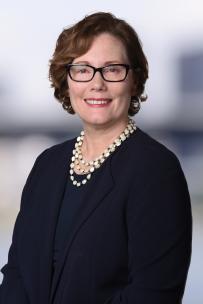
As Jacobs’ Global Water Director, Susan Moisio leads more than 9,000 visionaries and doers providing world-leading technical and environmental expertise to address complex challenges across drinking water, wastewater, desalination, conveyance and flood control. Named one of the most powerful women in water by Global Water Intelligence (GWI), Susan is a champion of OneWater principles and works tirelessly to share her experience as a mentor and advance the water industry.
You might be interested in...
-
 Showcase
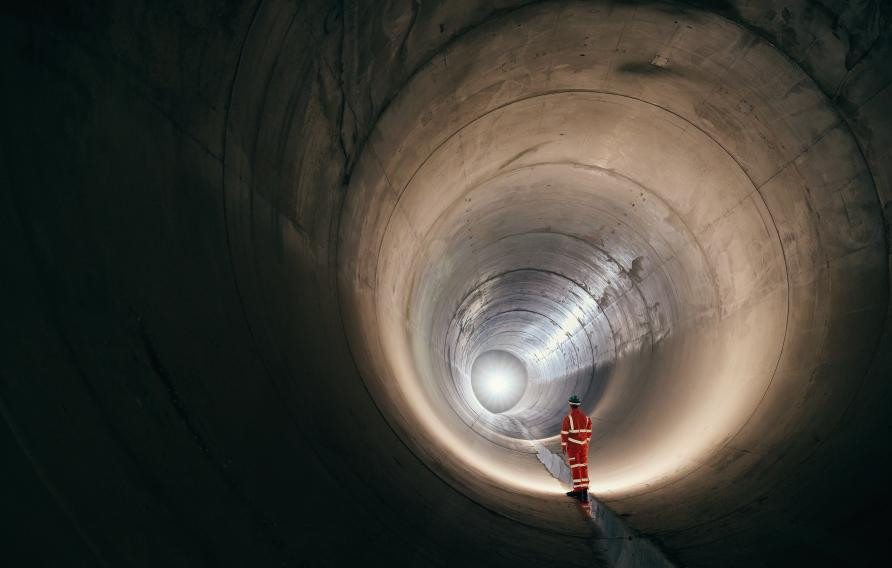
Delivering the UK’s Largest-Ever Water Infrastructure Program
The Thames Tideway Tunnel will clean up one of London’s greatest natural assets, the iconic River Thames, protect it for generations to come and improve the quality of life for all Londoners.
-
 News
NewsSecuring the Flow: Building Cyber Resilience into Water’s Digital Future
Water utilities face growing cyber risks, with attacks capable of disrupting essential services and impacting entire communities. As operational systems become more connected, OT cybersecurity can no longer be treated as an afterthought - it must be designed in from the start. Two of our cybersecurity and operational technology leaders share their perspectives on how utilities can embed cyber requirements early to strengthen resilience and protect critical infrastructure.
-
 Showcase
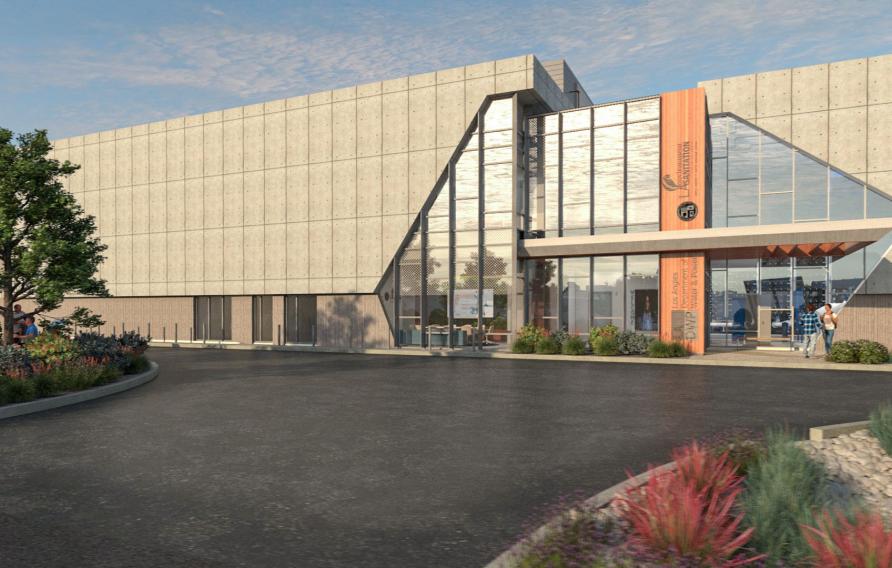
Reimagining Water Security in Los Angeles: Inside the Donald C. Tillman Advanced Water Purification Facility
By 2028, Los Angeles will have one of the nation’s most advanced water reuse facilities, capable of transforming 30 million gallons per day of treated wastewater into clean water for groundwater replenishment. The Donald C. Tillman Advanced Water Purification Facility — designed and built by Jacobs — combines cutting-edge technology, public education and sustainable design to help the city maximize water reuse.
-
 Showcase
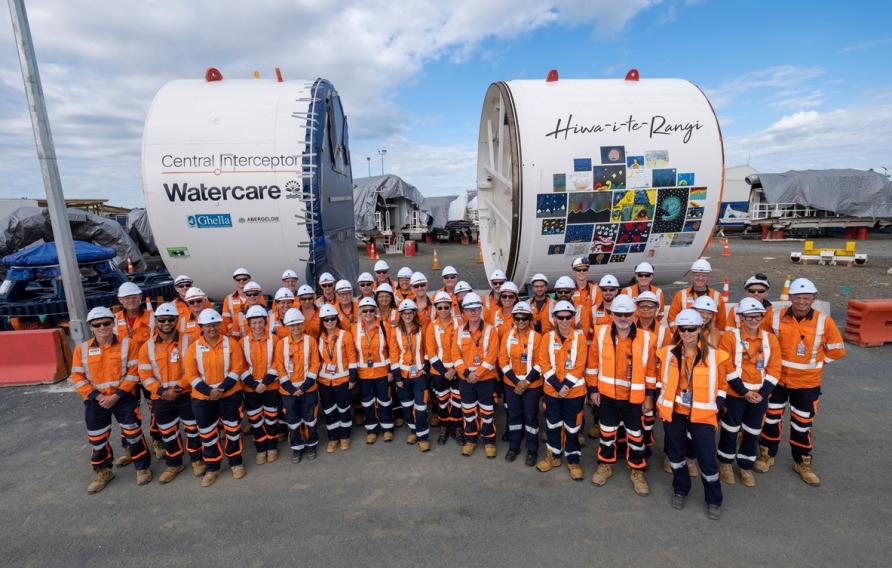
Central Interceptor Largest-Ever Wastewater Project
Central Interceptor, the supersized wastewater tunnel, will play a crucial role in ensuring cleaner waterways for central Auckland, New Zealand.
-
 News
NewsWater, Energy and Food: Water’s Role at the Nexus of Three Critical Resources
Jacobs Global Water Director Susan Moisio explores the interconnectivity of water, energy and food and the need for integrated, cross-sector solutions. Read her perspectives.
-
 Showcase
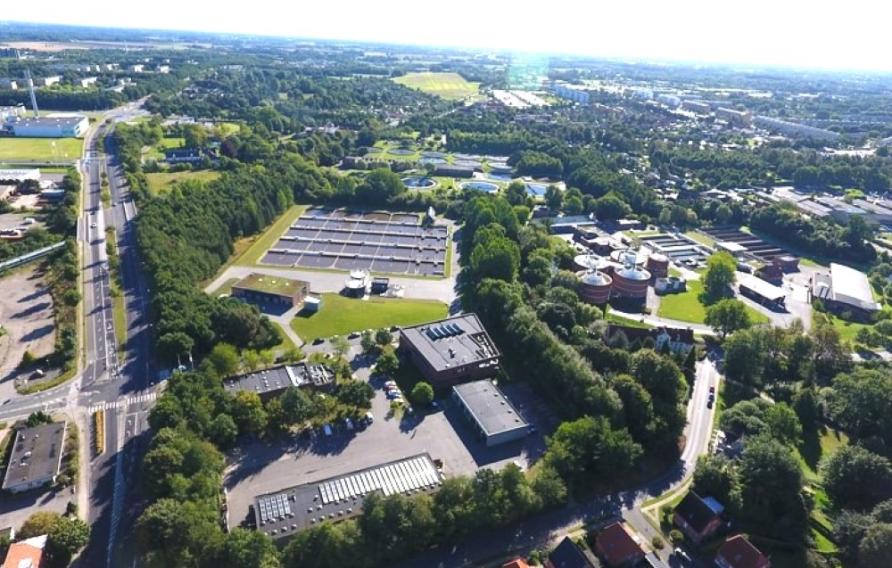
From Grid-Dependent to Grid-Positive: The Ejby Mølle Breakthrough
A modest optimization workshop in 2012 sparked a decade-long transformation at Denmark’s Ejby Mølle facility. Together, VCS Denmark and Jacobs turned an aging wastewater plant into an award-winning global model for innovation, energy positivity, and sustainability—achieving 150% energy self-sufficiency and redefining what’s possible in utility performance.
