






















Our People
Shaping Tomorrow’s Skylines with Safety as the Foundation: Meet Abdul Asghar
Middle East


-
Save to favoritesShare with your friends
-
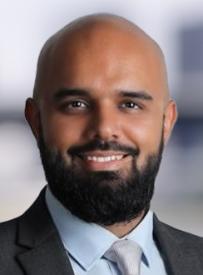
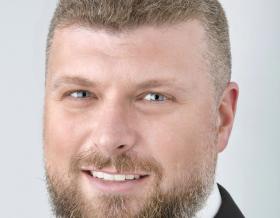
With more than a decade of experience in Health, Safety and Environment (HSE) design across Europe, the United Kingdom and the Middle East, Abdul specializes in embedding HSE into the design phase of construction projects. He drives safer, more efficient solutions for clients, contractors and end users. Currently, Abdul is the HSE design lead across the Middle East region, where he collaborates with multidisciplinary teams to align HSE in design standards with global best practices and client expectations.
Get to know Abdul
-
10 +
years as a HSE in Design professional
-
3
peaks of the United Kingdom hiked and conquered
-
10 +
padel tennis tournaments organized
Tell us about your career journey so far.
I started working in the U.K. before branching out to projects in Europe and Asia for about 10 years. I earned my qualifications in health and safety and then moved into the role of a Construction Design Management (CDM) professional.
I began my HSE career in 2015 after obtaining my National Examination Board in Occupational Safety and Health (NEBOSH) General Certificate. Over the next decade, I worked as a CDM professional delivering projects across Europe, the U.K. and Asia. I served as a client advisor and principal contractor advisor but primarily worked as a principal designer. That’s where I discovered my passion for HSE in design.
In January 2024, I joined Jacobs Middle East as part of the HSE team, working full time as HSE in design lead on the King Salman International Airport project.
What does your role involve?
My role is to integrate our BeyondZero values into the design process. That means executing the design phase through a safety lens — considering how assets will be built, how people will move through and interact with it, where risks may arise, and how we can mitigate them from the start. It’s about ensuring what we deliver is safe to build, operate and use.
What benefits does a client get from HSE in design?
The biggest benefit is confidence. Clients know that Jacobs’ designs not only meet but exceed health, safety and environmental performance.
It’s not just about providing a report — it’s about making safety tangible. We deliver drawings and designs that realize the client’s vision in a way that is safe to construct, use, maintain and access. That means assets are built to last without creating unnecessary risk for those who build or operate them.
How is HSE in design transforming the construction industry?
Traditionally, HSE has focused on site safety, personal protection equipment (PPE) and workplace hazards. HSE in design shifts that thinking to the very start of a project, during concept and design. That allows us to influence the entire life cycle.
It’s a powerful change. We’re designing with people and the environment in mind — whether they build, maintain or use the asset. It’s a holistic approach that proactively saves lives and delivers better outcomes.
What tools or processes are used to drive HSE in design?
One is de5ign, a comprehensive tool rooted in Jacobs’ BeyondZero commitment to positively impact every environment we touch. De5ign combines principles, global best practices and competencies to deliver HSE in design in projects.
We also use the de5ign Hazard Wheel, a visual tool that helps designers complete risk assessments. This multilayered approach provides a clear, easy-to-use application across any design.
How has integrating HSE in the design phase influenced major decision-making?
The integration of HSE in design principles into the KSIA project has significantly influenced major decision-making, particularly through our collaboration with Foster + Partners (F+P). Aligning our HSE philosophies and strategies with theirs proved to be a pivotal and rewarding aspect of the project, ensuring both Jacobs and F+P operated with shared understanding of HSE priorities throughout the design development process — whether working collaboratively or independently.
Once a unified HSE in design approach was established, we observed a tangible shift in the mindset of the design teams. Our structured HSE in design reviews prompted designers to evaluate the broader lifecycle implications of their decisions — considering not only constructability, but also long-term maintenance, operational use and eventual alterations and/or decommissioning. This encouraged a more holistic and responsible design ethos, where safety and sustainability was embedded from the outset rather than retrofitted later.
This proactive approach enabled us to guide design decisions using our industry-leading HSE in design toolkit, which provided practical frameworks and benchmarks for evaluating safety performance. Designers began to prioritize human and environmental wellbeing as core design drivers, leading to more pragmatic and resilient solutions.
As the project advances through successive design stages, HSE considerations are becoming increasingly integral to the design process. The collaborative environment has fostered innovative and creative safety solutions and our design safety performance is now being evidenced through measurable outcomes and best-in-class practices. This evolution underscored the values of embedding HSE in design early, not only as a compliance measure but as a catalyst for smarter, safer and more sustainable design.
What long-term operational benefits do you expect as a result of embedding HSE principles into infrastructure design?
Embedding HSE principles into the infrastructure design delivers substantial long-term operational benefits, both in terms of safety performance and resource efficiency. By integrating HSE considerations from the outset, we can proactively address risks that would otherwise require reactive — and often costly — interventions post-construction.
Designing with safety as a foundational element ensures that the infrastructure inherently supports the wellbeing of construction operatives, end-users, maintenance personnel and operational teams. This approach reduces likelihood of incidents during construction, simplified maintenance procedures and enhances the overall resilience of the built environment.
Given the scale and ambition of KSIA, HSE in design is not just a compliance measure — it is a strategic imperative. For the airport to operate safely while maintaining a reputation for innovation and engineering excellence, HSE must be embedded as a core design philosophy. This has been the guiding objective of our work.
Moreover, HSE in design serves as a preventative mechanism that mitigates client concerns regarding the safety performance of the completed asset. It enables us to deliver infrastructure that is not only compliant but also future-ready — minimizing operational disruptions, reducing lifecycle costs and safeguarding lives.
Ultimately, the integration of HSE principles into the design phase transforms safety from a reactive obligation into a proactive value driver. It ensures the assets and infrastructure are equipped to meet the demands of modern aviation while prioritizing human and environmental wellbeing throughout its operational life.
What is driving your passion?
There are several factors, and this is where I get personal. Before I joined Jacobs in January 2024, I felt I had hit a ceiling in my career. Working here, surrounded by some of the most knowledgeable professionals in the industry, has pushed me to raise my own standards.
It has been a challenge and a learning curve, but Jacobs has given me the drive to grow. I’m grateful to be part of a culture rooted in BeyondZero and de5ign principles.
What does good HSE look like?
Good HSE means submitting designs that show health, safety and environment as core decision-making factors. Every design choice — from cladding materials to plant room placement — should have a clear HSE rationale that benefits both the builders and the end users.
“Safety isn’t a barrier to progress — it’s the foundation of it. Let’s shape the skylines of tomorrow safely.”

Abdul Asghar
